Showing posts with label Mammals. Show all posts

22.9.14

What Does Fido Want?

Statistically speaking, most readers of this blog will have owned, own, or will own a pet at some point in their life. I myself love pets, but stick to the non-furry kinds of pets (fish and reptiles, mainly) due to asthma and allergies.

Dr. Jaak Panksepp is a neuroscientist and psychobiologist, and the Chair of Animal Well-Being Science for the Dept of Veterinary and Comparative Anatomy, Pharmacology, and Physiology at Washington State University's College of Veterinary Medicine. As if that wasn't impressive sounding enough, he's contributed a lot to the modern knowledge we have of base emotions, which all animals feel, and our understanding of the pathways emotions have through the brain (of all mammals, not just humans).

His research is astounding. His studies have found that there are seven genetic emotional systems. They are:
  • SEEKING (sensation of being curious/trying to make sense of surroundings)
  • RAGE (self-explanatory) 
  • FEAR (fear for social/physical/mental survival)
  • LUST (also self-explanatory)
  • CARE (typically maternal)
  • PANIC (also grief, having to do with separation distress)
  • PLAY (joyful)
His research helped us determine how best to interact with animals, and it's turning some of our original ideas on it's head. For instance animals can laugh. While it doesn't sound like our laughter, when you tickle rats, they chirp and are more likely to act favorably towards you. When chimps play with each other they pant. Science has traditionally thought that animals don't get happy or sad, but this is view is slowly changing. 

Some of his research has been shanghaied by others, to attempt to understand the basic emotional needs of animals, in order to make pet ownership easier, and living in captivity easier for the animals. If you want to hear Dr. Jaak Panksepp's research in words a non-scientist can understand, I encourage you to check out any book by Dr. Temple Grandin, an animal advocate whose autism allowed her deeper insight into the minds of animals. She is a truly remarkable woman, and she explains the science of it so much better than I ever could.

Dr. Grandin answers the question asked in the title of this blog in her book Animals Make Us Human, where she argues that in order to make our animal feel emotionally secure, as well as physically secure, we must try to keep our animals from feeling the RAGE, FEAR, and PANIC emotions that Dr. Panksepp  describes, and make sure the animals feels all of the positive emotions: SEEKING, LUST, CARE, and PLAY.

For a more in depth look at animal emotion, you might try to watch the documentary Animal Emotion: Why Dogs Smile and Chimpanzees Cry. It's fairly old, and I cannot find a link to a version that I wouldn't get in trouble for posting, but I'm certain you intelligent readers can find it on the Internet somewhere!

Sources:


18.9.14

How Bats Fly

My brain goes on tangents, sometimes, and instead of working this morning, I spent the better part of three hours studying bat muscles, so you guys are going to get the summation of what I learned here, with some comparisons and contrasts to avian flight, because it's interesting, to say the least.

If you don't know if you think bats are cool, let me just drop these facts on you:

  • A colony of 500 bats could eat over a quarter of a million mosquitoes per hour (of course this number is smaller in reality because bats also eat beetles, wasps, moths, and other pesky insects)
  • Bats have a talent for pollinating plants and dispersing seeds (bat poop is excellent fertilizer with fungicidal and nematocidal properties), promoting biodiversity and getting that backyard of yours looking flowery and beautiful
  • Less than 0.5% of all bats test positive for rabies, so they aren't as dangerous as you think they are


Bats vs. Birds

  • Birds have less joints in their wings than bats, which makes their wings more rigid (bats actually have a couple more joints than the joints present in human hands, allowing them precision control over the shape of the wing)
  • Bird wings are more efficient at providing lift, but bat wings are more maneuverable (bats can move and hover in all directions, while birds are more limited)
  • Bats can move the wing like a hand, making the motion of the wing more like swimming/rowing in the air, as opposed to the avian flapping motion


Anatomy of a Bat Wing

  • Bats have a thin membrane of skin (pantagium) between hand and body, and between each finger bone
  • The thumb extends out of the wing as a small claw which is used for climbing
  • Bats have 12-20% of their entire body weight in each one of their wings, so they maneuver using inertia (they need to be able to react against their own weight)
  • Each wing has long muscles embedded in the skin, front to back, which aren't attached to any bones and help shape the wings in flight. They are called plagiopatagiales proprii.


Bat Flight

Takeoff
  • Bats usually prefer to fall into flight from a high location (having used their thumbs to climb to said location)
  • They can takeoff from the ground when forced due to extra elastic biceps and triceps tendons

Downstroke
  • Muscles contract (Pectoralis major, Subscapularis, Serraturs anterior (partial), and Deltoid (partial))
  • Plagiopatagiales muscles tense to make the skin stretch less
  • Membrane (pantagium) curves allowing for greater lift using less energy than a bird would expend

Upstroke
  • Muscles contract (Deltoid (partial), Trapezius, Infraspinatus, Supraspinatus)
  • Plagiopatagiales muscles relax
  • The wing folds and slides along the body


So respect your local bat population. Because bats are awesome.

Sources:


Bats vs. Mosquitos

Bat Basics

Bats are more efficient fliers than Birds

Brown University Discovers Tiny Muscles in Bat Wings


15.9.14

Out Of Africa

Recently I went to see the new exhibit at California Academy of Science(CAS), called Skulls. This exhibit is, obviously, about skulls, more specifically, the skulls of vertebrate animals.

It was a wonderful exhibit, and I enjoyed myself very much. I encourage you all to go if you live nearby. My opinion was that the only thing they could so better would be to include more about comparative anatomy, but I'll post about that later.

After I saw this exhibit I went to the African exhibit, which was very interesting, and included a bit about human origins. Now I'm not criticizing this exhibit for the content it included, that was presented beautifully, I'm miffed about what the exhibit didn't include, which was some of the other models about human evolution.

CAS included only the Out of Africa model, which admittedly has the most support right now, but is in no way proven to the point that it is a theory and not a hypothesis.

So I'm going to go over the major hypotheses of human origins, so that you readers may know the options.

The Multiregional Continuity Model
Says: "After Homo erectus left Africa and dispersed into other portions of the Old World, regional populations slowly evolved into modern humans"
Means: Modern humans evolved from their ancestors (that lived all over Africa, Europe, and Asia) all together (albeit slowly) in every location
Looks Like This:
(thanks to Fred the Oyster for the graph)

The Out Of Africa Model
Says: "Modern humans evolved in Africa, migrated out of Africa, and replaced all populations which had descended from Homo erectus"
Means: Modern humans evolved in one location, and the earlier species were outmatched by how super duper awesome modern humans were... I kid... sort of
Looks Like This:

Apologies for poor image quality, and thanks to discover magazine


Now to be sure, Out Of Africa has the most support, but more recent discoveries have challenged it a bit. The timing of human dispersal is controversial, and likely will remain controversial until we discover more fossils, so I'm not going to weigh in on either theory as being more likely than the other. I simply think that both should be considered, and there is nothing wrong with presenting two opinions to the public, or admitting that science has yet to uncover all of the facts.

Sources:
actionbioscience

The Petralona Man

We were all Africans

Genetic Support for the out-of-Africa theory

5.2.12

I'll show you vampires

This rant was prompted by a very dear friend who enjoys romance novels.  Specifically paranormal ones.  I have nothing against that.  Read whatever you want to read.  What I have an issue with is the moment in the book after the vampire bites his lover, where he licks the wound closed because their saliva is supposed to have amazing healing properties.

I understand that this is a very specific issue to have with vampires in books.  But I want to keep this post away from the normal "I hate Twilight" nonsense.  Dracula was the only vampire story for me, and that's the way it will always be.  I never even picked up another vampire book.  So I'm staying away from that potentially disastrous conversation.  Frankly I'm amazed people still talk about Twilight, if it was so horrible.

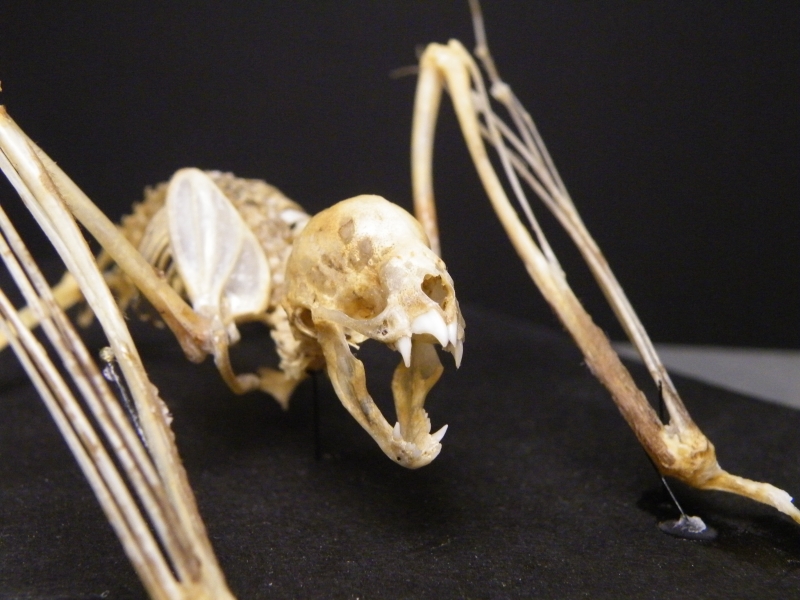
Anyway, back to my problem.  The licking to seal the wound closed.  Vampire bat saliva has anticoagulants in it to prolong bleeding.  Not to heal wounds.  I think all these authors wanted to pretend their vampires were more like other mammals in the sense that wound licking can have some healing properties.  Everybody has heard stories about some dog licking a wound, and it helps to heal, or whatever.  That's true, wound licking does sometimes help, through cleaning or whatever.  It also sometimes introduces bad oral bacteria into your system and can kill you.

In this case, the authors made their vampires more like this:


Than this:


And it's a tragedy.  Truly a tragedy.