So this happened last year, and some of you may have heard of it already, but recently someone was complaining that the Back To The Future Hoverboards haven't been created by scientists yet and would scientists just invent that already?
Well my impatient friend, scientists have something better to do. Like create the first 3D printed titanium human jaw and successfully implant it into a female patient.
BOOM.
So what happened was this woman had osteomyelitis (bone infection) that was so bad her lower jaw couldn't be saved. The awesome folks at Hasselt University Biomed (in Belgium) has a functional morphology research group and decided to help out. Functional morphology is the study of why things are shaped the way they are shaped, and how that shape affects the function of the thing.
So this research group created a customized 3D printed titanium jaw. They gave her an MRI so that they could customize the jaw, and built it in just two days.
This woman had a complete lower jaw implant, and it restored vital functions (breathing, speech, chewing, and sensation) as well as aesthetics (her jawline still looks like her). It's an incredible step forward with implants and health care. While current technologies limit the amount of personalized prosthetics that can be made, this could be commonplace in the near future, and represents a huge step forward in medical technology. This technique could be used in hip prosthetics, as well as knees and elbows, even spinal inserts.
For a while now, I've been working/studying with a lab that researched a certain type chytrid fungus. It's a herpetology lab (herpetology: the study of reptiles and amphibians, no one knows why they were lumped together, but they were), and the lab focuses on Bd. That is going to change soon, as I am going to begin studying birds, but I'd like to share a little bit of information I've picked up at my current place of work.
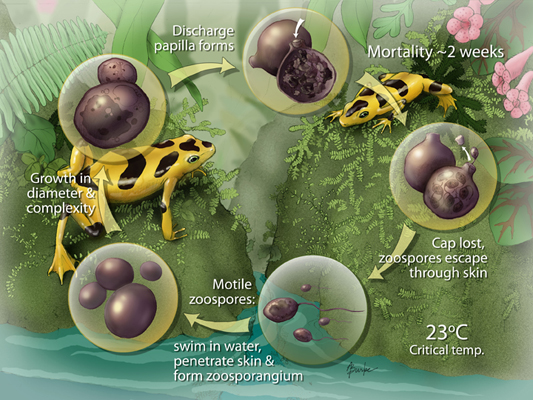
In the vernacular, chytrid fungus is a very old type of fungus, and the species were thought to either be saprobes (they eat dead/decaying stuff) or parasites that live on plants and invertebrate animals. Recently, however, and when I say recent I mean 1999, which in the world of science is very recent, a species was discovered that infected the skin of amphibians. Batrachochytrium dendrobatidis (shortened to Bd) was unusual because it was the only chytrid known that affected vertebrates, amphibians specifically.
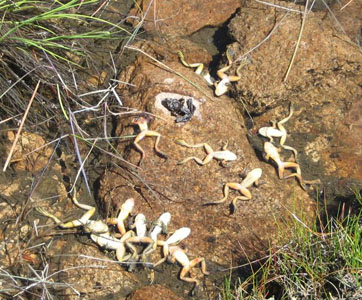
This is important because Bd appears to be capable of infecting almost all of the worlds amphibian species. An infection with a large amount of Bd is called chytridiomycosis. This disease causes the skin to become very thick, usually deadly in amphibians because they drink and absorb salts(electrolytes) through their skin, not their mouth. Abnormal levels of electrolytes can cause heart failure. In the lungless salamander, which uses its skin to breathe, chytridiomycosis can cause suffocation.
Since it was discovered, Bd has been found on every continent inhabited by amphibians in both wild and captive species. So far, there is still debate over whether this has been historically present and infecting populations all along and recent environmental changes caused a spike in the disease, or because it was only recently introduced to populations which have no defense.
This is a serious disease and has contributed to the recent global decline of amphibian populations. Other factors include environmental change and pollution, and habitat destruction (always a huge and horrible factor, so we need to work on saving the rain forest!).
Japanese Giant Salamander
Amphibians are critically important to our knowledge of the world around us. They are the best indicator species. An indicator species is a species whose presence/absence/health gives an indication of the health of the ecosystem as a whole. Amphibians are excellent indicators because not only to they live on land and in the water, they also absorb the environment right into their skin: water, salts, toxins, everything in the ecosystem.
Right now, their decline is telling us something very important. Habitats and ecosystems are critically changing. In the United States alone since just 1980, the number of native species suffering in severe population decline has doubled. The current extinction rate of amphibians is calculated to be at least 200 times the normal rate of background extinction.
Amphibians require a plentiful supply of fresh water free from chemicals and microbes to survive. So do humans. Human population growth and climate change are combining to create a situation in which a large and increasing proportion of the human population is denied access to sufficient, clean water. The rapid decline of the world's amphibians is a warning that this most precious of natural resources is under seriousthreat. Frogs aren't the ones contaminating said resources with chemicals. We are.
We need to wake up and get our shit together.
Sources: Gagliardo, R., P.Crump , E. Griffith,et al. 2008. The principles of rapid response for amphibian conservation using the programmes in Panama as an example, International Zoo Yearbook 42: 125-135.
Hyatt, A.D., DG Boyle, Olsen V et al. 2007. Diagnostic assays and sampling protocols for the detection of Batrachochytrium dendrobatidis, Diseases of Aquatic Organisms 73: 175–192.
Murray, K.A., L.F. Skerratt, R. Speare, and H. McCallum. 2009. Impact and dynamics of disease in species threatened by the amphibian chytrid fungus, Batrachochytrium dendrobatidis. Conservation Biology:23:1242-52.
Rachowicz, L.J., J. Hero, R.A. Alford, J.W. Taylor, J.A.T. Morgan, V.T. Vrendenberg, J.P. Collins, & C.J. Briggs. 2005. The novel and endemic pathogen hypotheses: Competing explanations for the origin of emerging infectious diseases of wildlife. Conservation Biology 19: 1441-1448.
Personally, I'm torn over the subject. I love birds of prey. I could watch them all day. There is a peregrine falcon that lives nearby, and I look for it all the time, I even go over to where it roosts to check out the dead bodies it drops onto the ground. Birds of prey are interesting.
However, I detest looking at songbirds. They are tiny and they flit around like they have really bad cases of ADD, and it's terribly difficult to distinguish between them. They are boring and silly. They have chirps and tweets that are all too high pitched for my poor ears to distinguish between, and they are hard to focus on because they can't sit still.
I don't mind crows, or blue jays. When they are making a huge fuss and a lot of noise, you can follow them and find cool things. Blue jays and cows are known for mobbing things [read: predators higher on the food chain]. If you follow them, you may find some cool animals like hawks or owls. If you follow a songbird, you'll probably only find berries, seeds, or more songbirds.
This little tale is to make a point. We humans care a lot about things that we can eat, and things that can eat us. I should also include things that we can use to benefit us, like things we can make into medicine or something comfy to sit on or what have you. It's awful, but its true. If you'd like proof, go to a museum and look at what they have fossils of on display. Pay particular attention to what you are drawn to. It will be something big, or with pointy teeth, or both.
We shouldn't let our interest limit us. There are things out there that I never thought I would be interested in. I'm writing this to encourage you and myself to break out of your tunnel vision. You can do anything. Next time you go outside, look up instead of down at your feet. Next time you read a book, pick a genre you'd never normally read in your life. Next time you search something lame on YouTube, search something on TED or AcademicEarth or 5min. Learn something.
I spent hours on TED the other day because I was bored and came upon a brilliant video on the potential of focused ultrasound in surgery. It's about non-invasive surgery. It's nothing like what I'm normally interested in, and it's an absolutely fascinating talk.
I'm sharing it, in hopes that you'll click on it, and watch the whole thing, and get as excited about it as I am.
Ignore the cheesy introduction to TEDMED. But the idea and concept is amazing. Sometimes I just look around and I'm humbled by what the human race has managed to accomplish. We have a responsibility that we need to keep in mind, because as a species, we are aware and cognizant and able to influence all other species on earth. That's huge. Huge. So we shouldn't just be interested in whatever we want. We should be interested in everything.
Keep in mind that things we might not be interested in now could save our lives in the future. No one thought bacteria was very interesting, and yet now it's important because we found out it's capable of killing us. No one thought fungi was very interesting until we realized we could use fungal chemicals to produce antibiotics. Some of the things we don't care about right now could save our lives in the future.
No one might thinks horseshoe crabs are that critical, but their blood contains a reagent that clots around the endotoxins in bacteria. They use this to test EVERYTHING in the medical industry to make sure it's free of bacteria. Intravenous drugs, vaccines, medical devices, etc. Everything. So maybe we should be a little more considerate towards these creepy little things.
Anyway, my point with this rant is to make sure you guys realize how lucky we have it, and how narrow minded most people [including myself] are when it comes to the world around us. So next time you take some time to yourself, do something unexpected, not for yourself, but for the world around you.
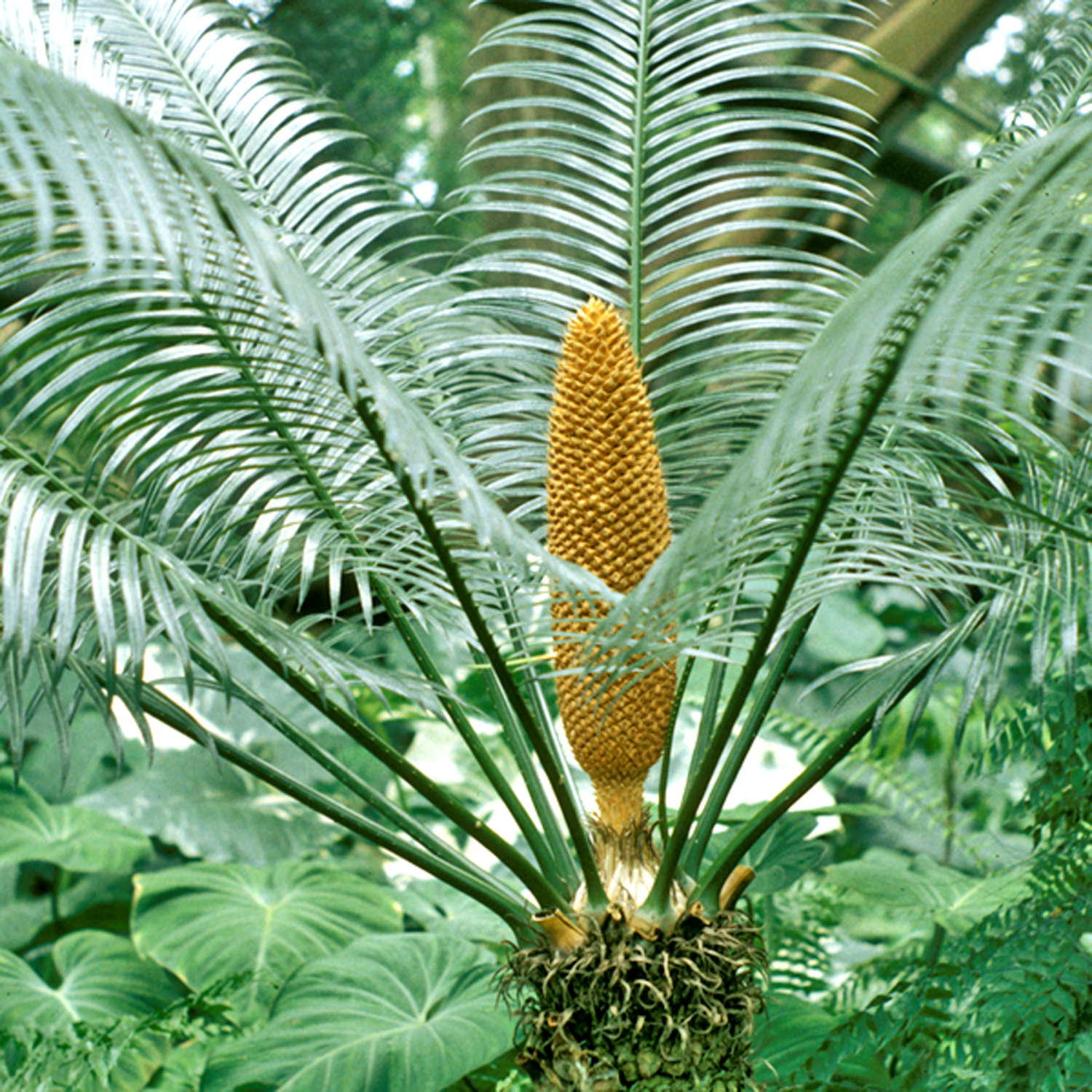
Rare, for sure, but I just got to see a guest lecture done by Dr. Paul Alan Cox, who is an Ethnobotanist. A truly brilliant man, who I just enjoyed so much, and he's doing mind blowing research with Cycads, specifically, on how cycads can cause ALS, Alzheimer's and Parkinson's. This work is done as the Institute for EthnoMedicine, and if you want the smart version, go check it out here.
In a nutshell, he discovered this protein [called BMAA] when he was checking out a village in Guam that had a really high percentage of all these diseases. He found out that it was produced by a known group of cyanobacteria [which are really cool themselves, their photosynthetic and nitrogen fixing, and they created Earth's oxygen atmosphere, they're one of the reasons we live on this planet, so before you think I'm blaming all these diseases on cyanobacteria, take that into account], and that these cyanobacteria can be found in the roots of cycads. Anything that eats cycad seeds gets some of this BMAA protein. Over time the accumulation increases risk of or causes these diseases.
This means that exposure to cyanobacteria may be one of the causes of ALS/Alzheimer's/Parkinson's. So that means that no matter where you live, don't eat things that eat cycad seeds. For the Chamorro people in Guam, that means no more fruit bats and deer, as well as the flour they make from the seeds themselves. Cycads aren't commonly consumed in such high quantities, and they're a largely tropical species, so most people don't have to worry about it, and all these diseases are probably cause by other things anyway, but it's worth the heads up. And don't just willy nilly chop your cycad down because you think it's trying to kill you. As long as you're not eating/licking it, you're fine.
The important stuff I'm hoping you'll take away from this article is that plants, while not cognizant like we are, have a far superior arsenal than we have. It's called biochemistry. BMAA protein is thought to have been developed as a defense against the dinosaurs [the herbivorous ones]. These plants have been around far longer than us, and we should be aware that their defenses are just as complicated and beautiful as ours. Also, this research has the potential to develop into drugs and cures, so you guys should really check it out. It's an extraordinary discovery.