Showing posts with label Birds. Show all posts

18.9.14

How Bats Fly

My brain goes on tangents, sometimes, and instead of working this morning, I spent the better part of three hours studying bat muscles, so you guys are going to get the summation of what I learned here, with some comparisons and contrasts to avian flight, because it's interesting, to say the least.

If you don't know if you think bats are cool, let me just drop these facts on you:

  • A colony of 500 bats could eat over a quarter of a million mosquitoes per hour (of course this number is smaller in reality because bats also eat beetles, wasps, moths, and other pesky insects)
  • Bats have a talent for pollinating plants and dispersing seeds (bat poop is excellent fertilizer with fungicidal and nematocidal properties), promoting biodiversity and getting that backyard of yours looking flowery and beautiful
  • Less than 0.5% of all bats test positive for rabies, so they aren't as dangerous as you think they are


Bats vs. Birds

  • Birds have less joints in their wings than bats, which makes their wings more rigid (bats actually have a couple more joints than the joints present in human hands, allowing them precision control over the shape of the wing)
  • Bird wings are more efficient at providing lift, but bat wings are more maneuverable (bats can move and hover in all directions, while birds are more limited)
  • Bats can move the wing like a hand, making the motion of the wing more like swimming/rowing in the air, as opposed to the avian flapping motion


Anatomy of a Bat Wing

  • Bats have a thin membrane of skin (pantagium) between hand and body, and between each finger bone
  • The thumb extends out of the wing as a small claw which is used for climbing
  • Bats have 12-20% of their entire body weight in each one of their wings, so they maneuver using inertia (they need to be able to react against their own weight)
  • Each wing has long muscles embedded in the skin, front to back, which aren't attached to any bones and help shape the wings in flight. They are called plagiopatagiales proprii.


Bat Flight

Takeoff
  • Bats usually prefer to fall into flight from a high location (having used their thumbs to climb to said location)
  • They can takeoff from the ground when forced due to extra elastic biceps and triceps tendons

Downstroke
  • Muscles contract (Pectoralis major, Subscapularis, Serraturs anterior (partial), and Deltoid (partial))
  • Plagiopatagiales muscles tense to make the skin stretch less
  • Membrane (pantagium) curves allowing for greater lift using less energy than a bird would expend

Upstroke
  • Muscles contract (Deltoid (partial), Trapezius, Infraspinatus, Supraspinatus)
  • Plagiopatagiales muscles relax
  • The wing folds and slides along the body


So respect your local bat population. Because bats are awesome.

Sources:


Bats vs. Mosquitos

Bat Basics

Bats are more efficient fliers than Birds

Brown University Discovers Tiny Muscles in Bat Wings


23.2.12

Costa Rica

Is where I'll be this summer!  Researching avian ecology and the Chestnut-backed Antbird.  Specifically nest predation.

I have never been to Costa Rica, so today I am sharing what I'm teaching myself, and you're welcome to correct me if you know more.

But first, the Chestnut-backed Antbird:
photo credit to: Jorge Chincilla


Puffy little thing.  Common in the understory of wet forests.  Like most antbirds, it doesn't actually survive solely by preying on army ant swarms, it just forages on them opportunistically.

This is a male, probably.  Like I said, I'm not completely familiar with the species, but the females are said to have brown coloration on their breast and belly, and males have black.

Other things I should look out for when I'm down there are venomous snakes (like bushmasters) and jaguars (I really want to see one, but if I couldn't live to talk about it, it wouldn't be worth seeing), all manner of really awesome bugs (check out the list here), and bird heaven.  I will be in tropical wet forest.

From what I've seen of species maps, Costa Rica is apparently home to two species of bushmaster, the Black-headed bushmaster and the Central American bushmaster.

Black-headed bushmaster (Lachesis melanocephala)


Central American bushmaster (Lachesis stenophrys)


Not a super great shot of the body, but the difference in head coloration is mainly what you need to see.  Genus Lachesis consist of three species of venomous pit vipers (not shown here is the South American bushmaster).  Bushmasters are the longest venomous snakes in the western hemisphere, and longest viper.  The venom can be fatal, but usually only causes sever pain, vomiting, nausea and the chills.  Thankfully the snake is most efficient as a nocturnal predator and it's contact with humans is limited because of this.  With regards to the myth that they hunt in pairs and are attracted to fire, I've found millions of statements denying both.

Another snake to fear would be the Fer-de-lance, or terciopelo (Bothrops asper).  Another viper.  You can research that one on your own.

As far as snakes in Costa Rica go, unless you know your stuff, leave them alone.  This is directed at myself.  Though hopefully I will meet an expert down there and benefit from their knowledge and wisdom.

As far as bugs go, I really want to see a Hercules Beetle (Spanish name: Cornizuelo, Dynastes hercules), and here is why:


That thing is awesome.  I want to hold it right by my face and take a very cliche photograph with it.

As far as mammals go, I haven't got anything specific in mind, but I will be on the lookout for pretty much everything.  I'm hoping to procure a couple field guides.  Not sure which are the greatest yet, but don't worry, I will do my research.

Also, on a related note, I'd like to make sure everybody knows how to differentiate between a venomous snake and non venomous snake.  The guideline I'm including is a rough guide, there are exceptions.  The part to pay most attention to is the head shape, because that's usually what you can see from a ways away.


Also, it says U.S. snakes, but it's pretty universal, and this chart also doesn't include sea snakes, simply because the one with sea snakes wasn't as well drawn.

Use wisely.

6.2.12

Birds and why I should let go of my prejudice

Personally, I'm torn over the subject.  I love birds of prey.  I could watch them all day.  There is a peregrine falcon that lives nearby, and I look for it all the time, I even go over to where it roosts to check out the dead bodies it drops onto the ground.  Birds of prey are interesting.

However, I detest looking at songbirds.  They are tiny and they flit around like they have really bad cases of ADD, and it's terribly difficult to distinguish between them.  They are boring and silly.  They have chirps and tweets that are all too high pitched for my poor ears to distinguish between, and they are hard to focus on because they can't sit still.

I don't mind crows, or blue jays.  When they are making a huge fuss and a lot of noise, you can follow them and find cool things.  Blue jays and cows are known for mobbing things [read: predators higher on the food chain].  If you follow them, you may find some cool animals like hawks or owls.  If you follow a songbird, you'll probably only find berries, seeds, or more songbirds.

This little tale is to make a point.  We humans care a lot about things that we can eat, and things that can eat us.  I should also include things that we can use to benefit us, like things we can make into medicine or something comfy to sit on or what have you.  It's awful, but its true.  If you'd like proof, go to a museum and look at what they have fossils of on display.  Pay particular attention to what you are drawn to.  It will be something big, or with pointy teeth, or both.

We shouldn't let our interest limit us.  There are things out there that I never thought I would be interested in.  I'm writing this to encourage you and myself to break out of your tunnel vision.  You can do anything.  Next time you go outside, look up instead of down at your feet.  Next time you read a book, pick a genre you'd never normally read in your life.  Next time you search something lame on YouTube, search something on TED or AcademicEarth or 5min.  Learn something.

I spent hours on TED the other day because I was bored and came upon a brilliant video on the potential of focused ultrasound in surgery.  It's about non-invasive surgery.  It's nothing like what I'm normally interested in, and it's an absolutely fascinating talk.

I'm sharing it, in hopes that you'll click on it, and watch the whole thing, and get as excited about it as I am.


Ignore the cheesy introduction to TEDMED.  But the idea and concept is amazing.  Sometimes I just look around and I'm humbled by what the human race has managed to accomplish.  We have a responsibility that we need to keep in mind, because as a species, we are aware and cognizant and able to influence all other species on earth.  That's huge.  Huge.  So we shouldn't just be interested in whatever we want.  We should be interested in everything.

Keep in mind that things we might not be interested in now could save our lives in the future.  No one thought bacteria was very interesting, and yet now it's important because we found out it's capable of killing us.  No one thought fungi was very interesting until we realized we could use fungal chemicals to produce antibiotics.  Some of the things we don't care about right now could save our lives in the future.

No one might thinks horseshoe crabs are that critical, but their blood contains a reagent that clots around the endotoxins in bacteria.  They use this to test EVERYTHING in the medical industry to make sure it's free of bacteria.  Intravenous drugs, vaccines, medical devices, etc.  Everything.  So maybe we should be a little more considerate towards these creepy little things.

Anyway, my point with this rant is to make sure you guys realize how lucky we have it, and how narrow minded most people [including myself] are when it comes to the world around us.  So next time you take some time to yourself, do something unexpected, not for yourself, but for the world around you.

30.1.12

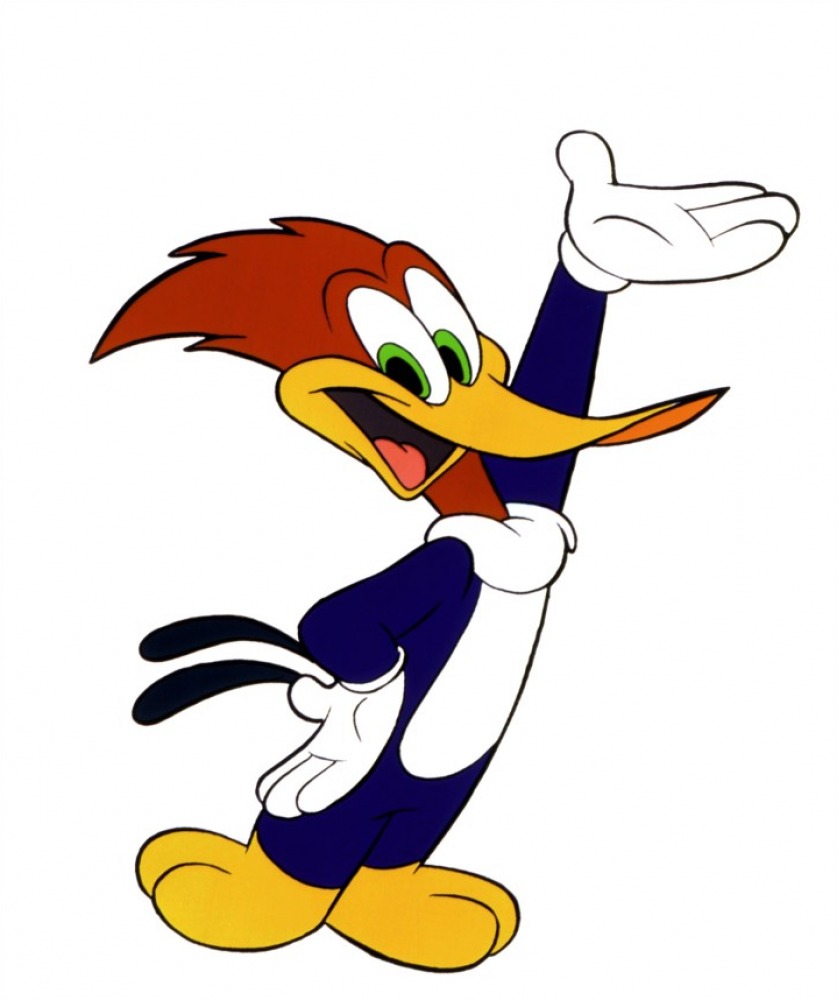
Classifying Woody the Woodpecker

I should state, before I continue with my rant, that I am not an ornithologist.

Woody the Woodpecker.  He is a beloved character with a Wikipedia article miles long.  The reason I am bringing him up is because Wikipedia says that he is an "anthropomorphic acorn woodpecker."  I completely disagree with this claim.  Any person with eyes will tell you that the two simply do not match, no matter how anthropomorphous Woody gets.


This is Woody.

This is an Acorn Woodpecker.


This is a Red-headed Woodpecker, and what I believe Woody should be classified as an anthropomorphized version of.  I am basing this entirely on the head.  Truthfully Woody doesn't look like any species of woodpecker I've ever seen.