I am a Pacific North westerner, and as such, it is that time of year where the entire land has been on fire for months, and it doesn't seem to be slowing down. Fire is a real danger here. The interesting thing about it is how little humans have adapted to cope with this very real and expected phenomenon. We expect firefighters to be able to contain it. Every year when we turn on the news and read about destroyed houses, we don't immediately make sure our home has fire insurance. Somehow this yearly phenomenon is never expected to affect us.
Wild animals cope with fire. They've evolved mechanisms to deal with it, and while they don't operate under the assumption that it will happen to them, just as humans do, they have very good instincts on how to handle it, just as we don't. Animals without the capacity to outrun the fire burrow beneath the earth to escape the heat. Animals with the capacity to run do just that. That's not to say they all survive, however, and please do not think I'm arguing humans be more like animals in their ability to leave everything and run.
I am merely observing that in the case of a wildfire, we the human species have made it extremely difficult to pick up and run. To drop everything and get out. Because from an evolutionary standpoint, that is the only intelligent thing to do. But we, the most intelligent species, have built very stationary shelters, and filled them with things that matter to us emotionally and culturally (such as photos and trinkets), which in turn make us hesitate to preserve ourselves biologically.
Our first priority should be to live, and, if possible, ensure the lives of others. After that, time permitting, we should think of our pets, and then, only then think of inanimate objects.

A place to share everything we know about the crazy, wonderful living things on this planet we call home.
Showing posts with label Humans. Show all posts
Showing posts with label Humans. Show all posts
26.10.15
22.9.14
What Does Fido Want?
Statistically speaking, most readers of this blog will have owned, own, or will own a pet at some point in their life. I myself love pets, but stick to the non-furry kinds of pets (fish and reptiles, mainly) due to asthma and allergies.
Dr. Jaak Panksepp is a neuroscientist and psychobiologist, and the Chair of Animal Well-Being Science for the Dept of Veterinary and Comparative Anatomy, Pharmacology, and Physiology at Washington State University's College of Veterinary Medicine. As if that wasn't impressive sounding enough, he's contributed a lot to the modern knowledge we have of base emotions, which all animals feel, and our understanding of the pathways emotions have through the brain (of all mammals, not just humans).
His research is astounding. His studies have found that there are seven genetic emotional systems. They are:
- SEEKING (sensation of being curious/trying to make sense of surroundings)
- RAGE (self-explanatory)
- FEAR (fear for social/physical/mental survival)
- LUST (also self-explanatory)
- CARE (typically maternal)
- PANIC (also grief, having to do with separation distress)
- PLAY (joyful)
His research helped us determine how best to interact with animals, and it's turning some of our original ideas on it's head. For instance animals can laugh. While it doesn't sound like our laughter, when you tickle rats, they chirp and are more likely to act favorably towards you. When chimps play with each other they pant. Science has traditionally thought that animals don't get happy or sad, but this is view is slowly changing.
Some of his research has been shanghaied by others, to attempt to understand the basic emotional needs of animals, in order to make pet ownership easier, and living in captivity easier for the animals. If you want to hear Dr. Jaak Panksepp's research in words a non-scientist can understand, I encourage you to check out any book by Dr. Temple Grandin, an animal advocate whose autism allowed her deeper insight into the minds of animals. She is a truly remarkable woman, and she explains the science of it so much better than I ever could.
Dr. Grandin answers the question asked in the title of this blog in her book Animals Make Us Human, where she argues that in order to make our animal feel emotionally secure, as well as physically secure, we must try to keep our animals from feeling the RAGE, FEAR, and PANIC emotions that Dr. Panksepp describes, and make sure the animals feels all of the positive emotions: SEEKING, LUST, CARE, and PLAY.
For a more in depth look at animal emotion, you might try to watch the documentary Animal Emotion: Why Dogs Smile and Chimpanzees Cry. It's fairly old, and I cannot find a link to a version that I wouldn't get in trouble for posting, but I'm certain you intelligent readers can find it on the Internet somewhere!
Sources:
21.9.14
Apocalypse Then
We live in the Milky Way Galaxy. Our neighbor is the Andromeda Galaxy. The Milky Way will be consumed by the Andromeda Galaxy in about five billion years (according to the latest studies).
Not to worry, however, because life on Earth will end much sooner than that, when our sun enters the red-giant stage of it's life, it's diameter will reach Earth (having engulfed Mercury and Venus). In all honesty life would probably end before this phase. The sun will become a red giant star in approximately five billion years (about when our galaxy starts getting consumed by Andromeda). However Earth will have gotten too hot for life to continue a bit earlier than five billion years from now.
More heat means more water vapor and less carbon dioxide, so the plants will go first. As plant species go extinct, the animals will decline too pretty much simultaneously. In approximately 2.8 billion years scientists estimate that only the hardiest of microbes will be left behind. Once temperatures reach over 140 degrees Celsius, DNA breaks down, and even those microbes will be lost.

Don't fret, however. This is an unimaginably long time away.
Or, perhaps, fret a lot, because current rates of climate change weren't given a lot of consideration, and that's looking bleaker by the second.
Sources.
Milky Way Will Be Consumed
Biosignature Doomsday
Not to worry, however, because life on Earth will end much sooner than that, when our sun enters the red-giant stage of it's life, it's diameter will reach Earth (having engulfed Mercury and Venus). In all honesty life would probably end before this phase. The sun will become a red giant star in approximately five billion years (about when our galaxy starts getting consumed by Andromeda). However Earth will have gotten too hot for life to continue a bit earlier than five billion years from now.
More heat means more water vapor and less carbon dioxide, so the plants will go first. As plant species go extinct, the animals will decline too pretty much simultaneously. In approximately 2.8 billion years scientists estimate that only the hardiest of microbes will be left behind. Once temperatures reach over 140 degrees Celsius, DNA breaks down, and even those microbes will be lost.
Image courtesy SDO/NASA
Don't fret, however. This is an unimaginably long time away.
Or, perhaps, fret a lot, because current rates of climate change weren't given a lot of consideration, and that's looking bleaker by the second.
Sources.
Milky Way Will Be Consumed
Biosignature Doomsday
19.9.14
The Body Farm
Human decomposition is probably not something you want to think about often. I find it fascinating. It's one of those things that's taboo to talk about in society. Which is why I'm going to talk about it in honor of one of my favorite authors, Mary Roach, who wrote the book Stiff, which I just finished and thoroughly enjoyed. It's been around a while, but I just got to it, and I'm encouraging all of you to go out and read it. You can check it out here.
UT Knoxville has a body farm. A body farm is a research facility where human decomposition is studied. UT Knoxville cleverly names their body farm the Forensic Anthropology Center (FAC), so that it's less creepy sounding. While creepy, what they do there is fascinating stuff, and provides a lot of interesting and relevant facts that allow us to better solve crimes.
At the FAC law enforcement can request the recreation of a crime scene (like stuffing dead bodies into trunks and things) and the FAC will then test out those cases. They'll take a dead body, toss it into a field, or bury it, or stuff it in a trunk, and then they'll force some poor student/intern to monitor the stench/bugs/decay and such. The FAC even works with the FBI testing out facial recognition programs.
Personally I think that while this is probably a very foreign concept to most people, this is such a contribution to our pool of knowledge. There are certain things that, in the modern world, are slightly taboo to discuss (for instance things that happen to your body after you die). So it's nice to know that the squeamishness of some people hasn't limited the quest for knowledge.
To hear more about it in a more entertaining medium, here is a link to a video NatGeo did on Body Farms.
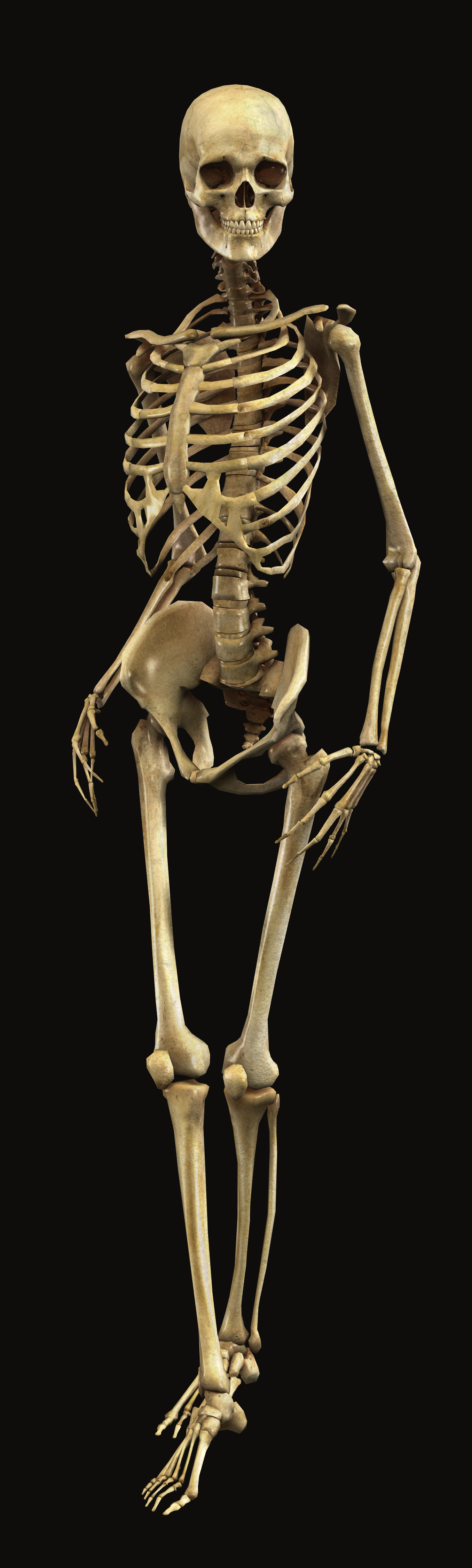
Also FYI If you want to contribute, you can donate your corpse. Once they're done with your dead body, they'll cremate your remains and hand you back to your family, OR they'll add your skeleton to their collection (they have 1,100).
There is actually going to be another body farm established in, I think, Michigan that is going to be dedicated to how bodies decay in cold weather, which is probably going to be fascinating, and I'm looking forward to the papers they'll be publishing as they get going.

Sources:
UT Knoxville
Awesome College Labs
The Body Farm
UT Knoxville has a body farm. A body farm is a research facility where human decomposition is studied. UT Knoxville cleverly names their body farm the Forensic Anthropology Center (FAC), so that it's less creepy sounding. While creepy, what they do there is fascinating stuff, and provides a lot of interesting and relevant facts that allow us to better solve crimes.
At the FAC law enforcement can request the recreation of a crime scene (like stuffing dead bodies into trunks and things) and the FAC will then test out those cases. They'll take a dead body, toss it into a field, or bury it, or stuff it in a trunk, and then they'll force some poor student/intern to monitor the stench/bugs/decay and such. The FAC even works with the FBI testing out facial recognition programs.
Personally I think that while this is probably a very foreign concept to most people, this is such a contribution to our pool of knowledge. There are certain things that, in the modern world, are slightly taboo to discuss (for instance things that happen to your body after you die). So it's nice to know that the squeamishness of some people hasn't limited the quest for knowledge.
To hear more about it in a more entertaining medium, here is a link to a video NatGeo did on Body Farms.
Also FYI If you want to contribute, you can donate your corpse. Once they're done with your dead body, they'll cremate your remains and hand you back to your family, OR they'll add your skeleton to their collection (they have 1,100).
There is actually going to be another body farm established in, I think, Michigan that is going to be dedicated to how bodies decay in cold weather, which is probably going to be fascinating, and I'm looking forward to the papers they'll be publishing as they get going.
Sources:
UT Knoxville
Awesome College Labs
The Body Farm
Subscribe to:
Posts (Atom)